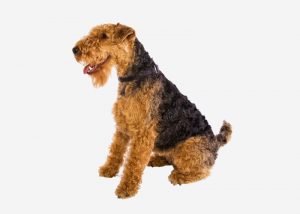
The Welsh Terrier is a Welsh breed of dog. It was originally bred for hunting Red Fox, rodents and Eurasian Badger, but during the last century it has mainly been bred for showing. Despite this, it has retained its terrier strength of character. The Welsh Terrier originates from Wales and has been claimed to be the oldest existing dog breed in the UK according to research.The Welsh Terrier was a latecomer to the British show-ring (being primarily a working dog) and was not officially registered as a breed until the 19th century. It is currently on the UK Kennel Clubs list of breeds that are in danger of dying out, having as few as 300 or so pups registered annually, as compared to the nation’s most popular breeds that are registered in the tens of thousands each year.
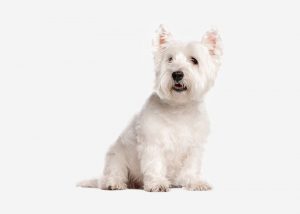
The West Highland White Terrier, commonly known as the Westie or Westy, is a Scottish dog breed with a distinctive white coat. The modern breed is descended from a number of breeding programs of white terriers in Scotland prior to the 20th century. Edward Donald Malcolm, 16th Laird of Poltalloch, is credited with the creation of the modern breed from his Poltalloch Terrier, but did not want to be known as such. Other related breeds included George Campbell, 8th Duke of Argyll’s Roseneath Terrier and Dr. Americ Edwin Flaxman’s Pittenweem Terriers. The breeds of small white Scottish terriers were given its modern name for the first time in 1908, with recognition by major kennel clubs occurring around the same time.The breed remains very popular in the UK and is in the top third of all breeds in the US since the 1960s. It has been featured in television and film including in Hamish Macbeth (TV series) and in advertising by companies such as Cesar dog food and Scottish whisky Black & White (whisky). It is a medium-sized terrier, although with longer legs than other Scottish breeds of terrier. It has a white double coat of fur which fills out the dog’s face giving it a rounded appearance. The breed can be good with children, but will not always tolerate rough handling. The Westie is an active breed, but are social with a high prey drive, as they were once used to hunt rodents.Several breed-specific and non-specific health issues appear in the breed including a condition in young dogs nicknamed “Craniomandibular osteopathy” which causes an overgrowth of bone in the jaw of the dog. It is also prone to skin disorders, with a breed-specific condition called Hyperplastic Dermatosis occurring. They are very energetic and need plenty of exercise. Cousin to the “Scotty”, the Westie was bred to hunt small rodents at places such as farms.
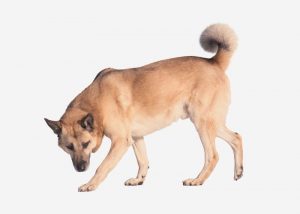
The West Siberian Laika or WSL, is a breed of hunting dog. Russian publications indicate that the term West Siberian Laika loosely applied to hunting dogs originating with the Mansi and Khanty people in Ural (region) and West Siberian Plain, but there were no standards or registrations of WSL as such until 1930. Then World War II disrupted it for a while, but systematic breeding with registrations resumed after the war ended, in 1946. This was the time the breed began taking modern shape. Before that hunters only knew of Mansi people Laika and Khanty people Laika. In early 1960 many hunters in Ural still preferred the term Mansi Laika, when speaking of West Siberian Laika. In Russian language, the term Laika originated from the word layat that means to bark. The word Laika simply means a dog that barks. Any hunting Laika is a bark pointer (pointing at animal of interest by barking and staying with the animal ). It is a versatile dog depending on use and environment, but in certain parts of the country they have become more specialized.
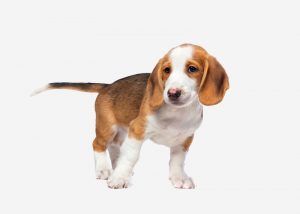
The Westphalian Dachsbracke is a small, short legged scenthound, a breed of dog originating in Westphalia, a region of Germany. The Westphalian Dachsbracke (FCI No. 100) was used in Sweden to develop the Drever.
The Wetterhoun, translated into English as the Frisian Water Dog, is a breed of dog traditionally used as a hunting dog for hunting small mammals and waterfowl in the province of Friesland in the Netherlands. The name of the dog comes from the West Frisian language Wetterhûn meaning “water dog.” Plural of Wetterhoun is Wetterhounen in Dutch. The breed may also be called the Otterhoun (not to be confused with the Otterhound) or Dutch Spaniel, although it is not a Spaniel-dog type dog. FCI No.221.
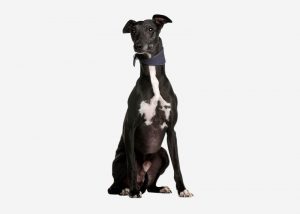
The Whippet (also English Whippet or Snap dog) is a breed of medium-sized dog. They are a sighthound breed that originated in England, where they descended from greyhounds. Whippets today still strongly resemble a smaller greyhound. Shown in the Hound group, Whippets have relatively few health problems other than arrhythmia. Whippets also participate in dog sports such as lure coursing, agility, and flyball.
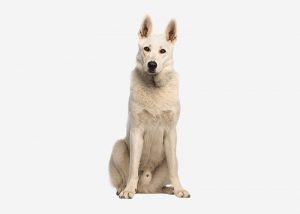
The White Shepherd emerged from white-coat lines of the German Shepherd Dog in Canada and the United States. The White Shepherd breed was officially recognized by the United Kennel Club on April 14, 1999. It has the same origins as the White Swiss Shepherd Dog (Berger Blanc Suisse, Weisser Schweizer Schäferhund) which is recognized as a separate breed by the Fédération Cynologique Internationale (FCI). White Shepherds often have longer fur than the traditional German Shepherd Dog, and do not always have a double coat.
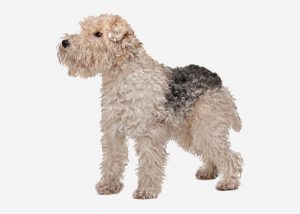
The wire fox terrier is a breed of dog, one of many terrier breeds. It is a fox terrier, and although it bears a resemblance to the smooth fox terrier, they are believed to have been developed separately.
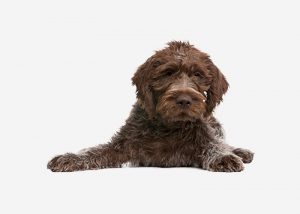
The Wirehaired Pointing Griffon (called the Korthals Griffon in the UK, and the Griffon d’arrêt à poil dur Korthals in France and Quebec) is a dog breed of dog used in hunting as a gundog. It is sometimes considered to be Netherlands in ancestry, due to the nationality of the breed founder, Eduard Karel Korthals. Others consider the Griffon to be a Germany breed because Korthals’ kennel, Ipenwoud, was located in Biebesheim am Rhein, Germany. It was there for over twenty years that Korthals dedicated his life to the development and perfection of the Wirehaired Pointing Griffon.The breed is still relatively rare in the United States, Canada, and the United Kingdom despite long recognition by their respective kennel clubs, as well as the Fédération Cynologique Internationale (Federation Cynologique Internationale). The Wirehaired Pointing Griffon is particularly adapted for hunting in thick undergrowth and around water, where its harsh coat is excellent protection.
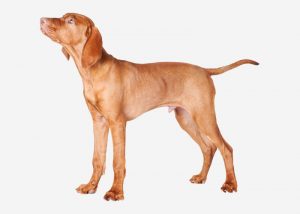
The Wirehaired Vizsla; English plural: Vizslas or sometimes Vizslak, based on the Hungarian plural vizslák ), is a dog breed originating in Hungary. Wirehaired Vizslas are known as excellent hunting dogs, and also have a level personality making them suited for families. The Wirehaired Vizsla is a versatile, natural hunter endowed with an excellent nose and an above average trainability. Although they are lively, gentle mannered, demonstrably affectionate and sensitive, they are also fearless and possessed of a well-developed protective instinct. The breed has a firmness on point, is an excellent retriever, and has the determination to remain on the scent even when swimming. The overall appearance embodies the qualities of a multi-purpose pointing dog, endurance, working ability and an easily satisfied nature. This is a dog of power and drive in the field, yet is a tractable and affectionate companion in the home.
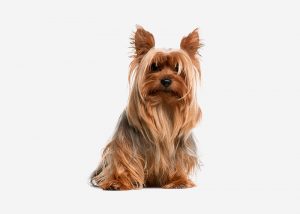
The Yorkshire Terrier is a small breed of terrier dog type, developed in the 19th century in the county of Yorkshire, England, to catch rats in clothing mills, also used for rat-baiting. The defining features of the breed are its maximum size of 3.2kg and its gray, black, and tan coat. The breed is nicknamed Yorkie and is placed in the Toy Terrier section of the Terrier Group by the Fédération Cynologique Internationale and in the Toy Group or Companion Group by other kennel clubs, although all agree that the breed is a terrier. A popular companion dog, the Yorkshire Terrier has also been part of the development of other breeds, such as the Australian Silky Terrier.