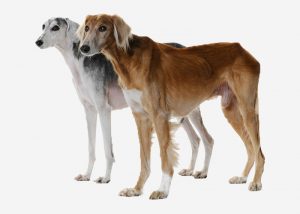
The Saluki, / ALA-LC: salūqī / Persian:سلوکی,سگ تازی also known as the (Slougui) (Arabian Greyhound) (Arabischer Windhund) (Sloughi Moghrebi) (Arabian Sighthound) (Levrier Marocain ) Royal Dog of Egypt or Persian Greyhound is one of the oldest known breeds of domesticated dog. There are petroglyphs and rock arts in Golpaygan and Khomein in central Iran that shows saluki-like hounds and falcons accompanying hunters chasing preys (ca. 8000–10,000 BCE). Also on the potteries found in, Iran (ca. 4200 BCE) are images of saluki-like hounds chasing ibex or lying next to pools. and from the period of the Middle Kingdom of Egypt onwards, Saluki-like animals appear on the ancient Egyptian pyramid#Historical development of 2134 BCE. They have connections to the Avesta, Bible, Koran and Imperial Chinese. Modern breeding in the west began in 1895 when Florence Amherst imported a breeding pair of Salukis from Lower Egypt and began working to popularize the breed. The first registered Salukis in the western studbook were Cyrus and Slongha Peri imported from Iran and registered with the DWZRV. DWZRV also records the first litter in 1922. Salukis were recognized by The Kennel Club in 1923, and by the American Kennel Club in 1929. The breed is also the mascot of Southern Illinois University Carbondale.The Saluki is a sighthound and historically traveled throughout Iran and through Silk road with caravans and nomadic tribes over an area stretching from the Sahara Desert to the Caspian Sea and China. They have been used to hunt quarry such as gazelles, hares and ibex (mostly in North Iran). Shaped like a typical sighthound, they come in two varieties, smooth and feathered. Though they are an independent breed that needs patient training, they are gentle and affectionate with their owners. Health issues in salukis include cancer and cardiac problems.
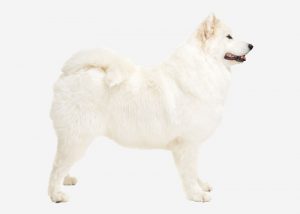
The Samoyed (/ˈsæməjɛd/ SAM-ə-yed or /səˈmɔɪ.ɛd/ sə-MOYed; Russian: Самоедская собака) is a breed of dog that takes its name from the Samoyedic peoples of Siberia. These nomadic reindeer herders bred the fluffy white dogs to help with the herding, and to pull sleds when they moved. An alternate name for the breed, especially in Europe is Bjelkier.
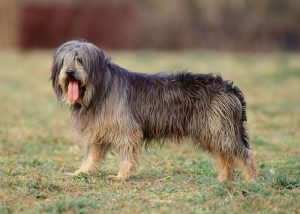
The Sapsal is a shaggy Korean dog breed. The word is followed in Korean language by either gae (meaning “dog”) or the suffix ee/i, but is most commonly romanization as “Sapsaree”. Traditionally, these dogs were believed to dispel ghosts and evil spiritual beings.
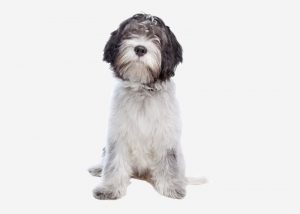
The Schapendoes or Dutch Sheepdog, is a breed of dog originating in the Netherlands. The Schapendoes was originally a herding dog and general farm dog, but today also participates in dog sports such as agility and flyball.
The Schillerstövare, translated as the Schiller Hound in English, is a breed of dog of the scenthound dog type originating as a hunting dog in Sweden in the late 19th century.
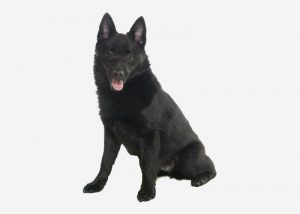
A Schipperke is a small Belgium breed of dog that originated in the early 16th century. There has been a long informal debate over whether this type of dog is a spitz or miniature Herding dog. In their home country of Belgium they are considered a small shepherd.
The Schweizer Laufhund is a breed of hound dog originally from Switzerland.
The Schweizerischer Niederlaufhund (FCI No, 60) (translated into English as the Swiss Hound, is a breed of dog of the scenthound dog type from Switzerland. Niederlaufhund means short-legged hound. The breed has a number of different varieties (all of the same breed).
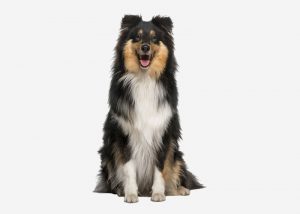
Scottish Collie or Scotch Collie was a Victorian-era term originally given to the collie dog derived from Scotland and nearby regions. Diversity of type was much more common during the 17th to very early 20th centuries. Type was varied, but the dogs could easily be discerned as being Collie dogs. “Scotch” was for the most part dropped from the name by the late 20th century. A small group of fanciers of the old-fashioned collie type have attempted to resurrect this type of dog, and utilize the name of Scotch Collie. Unfortunately, only a small number of “throwbacks” to the old-fashioned type exist, and so the fanciers have often resorted to using other breeds of the Collie family (most notably English shepherds, Australian shepherds or Border Collies) to help bring back the type they desire. Scotch Collie was the name given to what is now commonly known as the Collie (Rough-coated and Smooth-coated). Certain other breeds, most notably Collie descendants such as the English Shepherd, Australian Shepherd, and Border Collie, have sometimes also been referred to as the Scotch Collie. During the Victorian and Edwardian era the name was used to describe nearly all types of Collie dogs of English, Irish, and Welsh ancestry. In some regions, it described the dogs having the appearance and bloodlines deriving from the border regions of Scotland; in others, for dogs from the highland regions. In America, the term was mostly used to describe the entire land-race of collie dogs. After the turn of the 20th century in America, the AKC Scotch Collie was developed using dogs of primarily the highland regions of Scotland, the low country and border regions of Scotland and England. However, it is believed that Collie dogs from both Ireland and Wales were included as well(see Rough Collie). The Highlander’s Collies tended to be a bit larger, yet lighter-boned and longer legged than the border country Collie dogs, requiring the ability to survive on as little as possible, yet still be able to handle the large and surly “black face or Colley sheep.” Just a few of the other names that the breed was once known by include: Colley, Shepherd Dog, Cur Dog, Ban Dog, Scottish Shepherd of Sheepdog, English Sheepdog, Smooth English Sheepdog, among other names for the same breed or landrace of dog. Books such as Bob, Son of Battle (Alfred Olliphant) and Lassie Come Home (Eric Knight; later turned into a major movie) were written about the Scotch Collie which is one and the same as the Collie. It was sometime during the mid 1900s that the use of the prefix Scotch was generally dropped as the breed had become extremely popular and the prefix Rough or Smooth differentiated the two coat types as “Rough Collie ” and “Smooth Collie.” The Collie Health Foundation (http://www.colliehealth.org) maintains a website and database on disorders affecting collies.Some Scottish Collies (and other collie breeds) have a particular allele of the multi-drug resistance gene, MDR1. This is also known as “the ivermectin-sensitive collie”, however the sensitivity is not limited to ivermectin, a common drug used to treat and prevent various ailments in dogs including heartworm disease. More than 20 drugs are expected to cause adverse reactions including milbemycin and loperamide. A study by the Veterinary Genetics Laboratory at UC Davis concluded that all dogs with this mutation are descendants of a single dog which most likely lived in Great Britain during the middle of the 19th century. The mutation of the MDR1 gene is found in Scottish Collies and related breeds worldwide and affects approximately 80% of Scottish Collie dogs in the United States. Dogs with this mutation are predisposed to various sensitivities and some may suffer a potentially fatal neurotoxicosis.Ivermectin is a popular choice in the prevention of heartworm disease in dogs, an extremely serious and potentially fatal condition. Despite the high prevalence of sensitivity in Scottish Collies to this medication, the low dosage provided is generally considered safe and preventative drugs such as Heartgard are advertised as approved for Scottish Collies, having a wide margin of safety when used as directed. A simple test, recently developed at and provided by Washington State University, can determine if a dog is a carrier of the mutation which causes sensitivity. Scottish Collies typically live an average of 12 to 14 years.
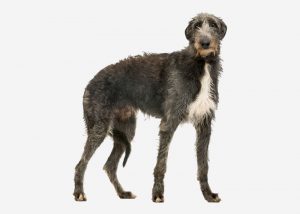
The Scottish Deerhound or simply the Deerhound, is a breed of hound (a sighthound), once bred to hunt the Red Deer by coursing.
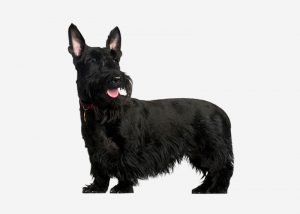
The Scottish Terrier (also known as the Aberdeen Terrier), popularly called the Scottie, is a breed of dog. Initially one of the highland breeds of terrier that were grouped under the name of Skye Terrier, it is one of five breeds of terrier that originated in Scotland, the other four being the modern Skye Terrier, Cairn Terrier, Dandie Dinmont, and West Highland White Terrier. They are an independent and rugged breed with a wiry outer coat and a soft dense undercoat. The First Earl of Dumbarton nicknamed the breed “the diehard.” The modern breed is said to be able to trace its lineage back to a single female, named Splinter II.They are a small breed of terrier with a distinctive shape and have had many roles in popular culture. They have been owned by a variety of celebrities, including the 32nd President of the United States, Franklin Delano Roosevelt, whose Scottie “Fala” is included with FDR in a statue in Washington, DC, as well as the 43rd President George W. Bush. They are also well known for being a playing piece in the board game Monopoly (game). Described as a territorial, feisty dog, they can make a good watchdog and tend to be very loyal to their family. Healthwise, Scottish Terriers can be more prone to bleeding disorders, joint disorders, autoimmune diseases, allergies, and cancer than some other breeds of dog and there is a condition named after the breed called Scotty cramp. They are also one of the more successful dog breeds at the Westminster Kennel Club Dog Show with a recent best in show in 2010.
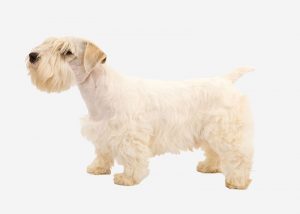
The Sealyham Terrier is a rare Wales breed of small to medium-sized terrier that originated in Wales as a working terrier. It is principally a white-bodied, coat dog breed, developed in the mid to late 18th century by Captain John Edwardes at Sealyham House, Pembrokeshire.Following the First World War, it surged in popularity and was associated with Hollywood stars and members of the British Royal Family. Its numbers have dropped significantly since then, with the breed listed as a Vulnerable Native Breed by the Kennel Club; an all time low was recorded in 2008 when only 43 puppies were registered in the United Kingdom. This decline has been blamed on an influx of foreign and designer dogs breeds, and the Sealyham’s reduced usefulness as a working dog.This breed is equally suitable as a family dog or a working terrier, given the right training. It is affected by few breed specific breed disorders, with the only two prevalent conditions being lens luxation and canine degenerative myelopathy.