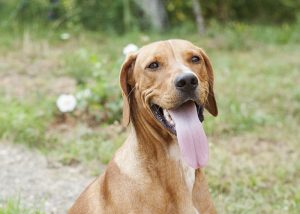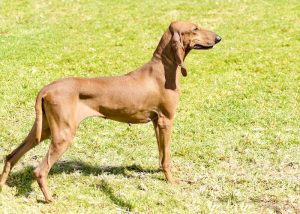
The Segugio Italiano is an Italian breed of dog of the scenthound family. It comes in both short-haired and wire-haired varieties. It is thought to be an ancient breed, descended in pre-Roman eras from progenitor scenthounds in ancient Egypt.The Segugio is a square dog, whose length should be equal to its height at the withers. It is fawn-coloured or black and tan. The dogs are 45–52 cm tall at the withers and roughly 20–23 kg in weight. Its determination to track a scent is similar to that of a Bloodhound, but unlike the Bloodhound the Segugio is also interested in the capture and kill of its victim. In 2009 Ente Nazionale della Cinofilia Italiana (the Italian Kennel Club) registered 4,500 specimens of the short-haired variety and 1,740 wire-haired specimens, making this one of the top ten breeds in Italy. Its popularity in Italy is due to its outstanding performance as a hunter of game. Although Italians also use other hound breeds, such as Ariegeois, Petit Gascon Santongeois, Porcelaine, Posavatz and Istrian Hounds, the Segugio Italiano has remained the choice of most Italian hunters due to its exceptional abilities. Hunters who hunt hare alone or in small groups find this dog to be ideal. The Segugio Italiano can also hunt larger game, such as wild boar (although it not considered a specialist for this quarry), wild sheep or goats or ungulates of the deer family. The Segugio Italiano works alone or in packs, depending on the quarry. This dog is first and foremost a working dog, and it is rarely kept as only a pet.
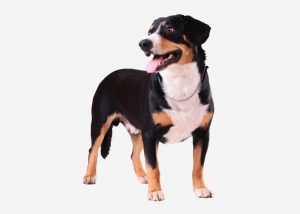
The Appenzeller Sennenhund is a medium-size breed of dog, one of the four regional dog breed of Sennenhund type dogs from the Swiss Alps. The name Sennenhund refers to people called Senn, herders in the Swiss Alps. Appenzell is an Alpine climate region in the northeast of Switzerland.
A rare working dog breed, the Seppala Siberian Sleddog is developed for the purpose of pulling a sled in cold country. It is a moderate-sized dog averaging 40 to 50 pounds (18 to 23 kg) weight and 22 or 23 inches (56 to 58 cm) height. Colours and markings are considered of little importance; eyes may be brown, blue or any combination of the two colours. Seppalas are active and energetic but very docile and trainable.Seppalas show a primitive canine type, never having been bred or selected for conformation or the show ring. The breed shares its ancestral base with the Siberian Husky and for half a century shared the same registry with that breed, but was bred always exclusively as a working sleddog breed in its own right and kept apart from show bloodlines. In the late 1990s, it was recognised by Canadian agricultural authorities as a new “evolving breed” and in 2002 a similar separate breed initiative was started in the USA.
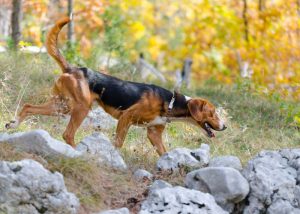
The Serbian Hound, previously known as the Balkan Hound (Балкански гонич / Balkanski gonič), is a pack hunting dog breed used in Serbia. It is red or tan with a black saddle, neck and cranium and red or tan face. Its head is flat and sloping, its muzzle pointed, with drop ears of the usual scent hound type. The Balkan Hound stands 17 to 21 inches (44–56 cm) in height and weighs about 44 pounds (20 kg). It is smooth-coated and coarse-haired. Described as pleasant natured and obedient, the breed is thought to descend from dogs left in the Balkan region by the Phoenicians in ancient times.The Fédération Cynologique Internationale changed its official designation of this breed to the Serbian Hound in 1996.The Serbian Hound is a very kind breed of dog, forming bonds with its family and owners. It is a lively breed and loves to walk and play with loved ones. The Serbian Hound is a very good worker with a tenacious nature that will not let it give up until it finds its quarry.
The Serbian Tricolour Hound (srpski trobojni goni? or trobojac) is a breed of dog of the hound type. Formerly called the Yugoslavian Tricolour Hound, the name was changed for clarity after the breakup of Socialist Federal Republic of Yugoslavia in 1991. The breed was first exhibited at shows in 1950. At one time it was considered a variation of the Serbian Hound, but was recognised by the Fédération Cynologique Internationale as a separate breed in 1961.The Serbian Tricolour Hound is a medium-large scenthound that was bred as a running hound (free running to seek game on its own, not on a leash.) It is used on feral pigs or wild boar and other large game as well as hare and fox.The Serbian Tricolour Hound is a devoted breed that loves its master without question and will loyally stand by him for all his life. It is a kind breed but also a tenacious hunter that performs very well in the field and has been a very successful hunting companion for many years.
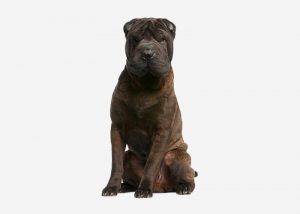
The Shar Pei or Chinese Shar-Pei, is a breed of dog known for its distinctive features of deep wrinkles and a blue-black tongue. The breed comes from China. The name (??, pinyin: sh? pí; English name probably derived from United Kingdom spelling of the Cantonese equivalent, s? pèih) translates to “sand skin” and refers to the texture of its short, rough coat. As puppies, Shar Pei have numerous wrinkles, but as they mature, these wrinkles loosen and spread out as they “grow into their skin”. Shar Pei were named in 1978 as one of the world’s rarest dog breeds by Time (magazine) magazine and the Guinness World Records. The American Kennel Club did not recognize the breed until 1991.
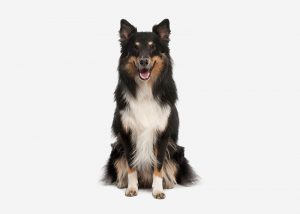
The Shetland Sheepdog, often known as the Sheltie, is a breed of herding dog. They are small to medium dogs, and come in a variety of colors, such as sable, tri-color, and blue merle. They are vocal, excitable, energetic dogs who are always willing to please and work hard. They are partly derived from dogs used in the Shetland Isles for herding and protecting sheep. The breed was formally recognized by the The Kennel Club in 1909.The Shetland Sheepdog’s early history is not well known. Although of obscure origin, the sheltie is probably a descendant of small specimens of the Scottish collie and the King Charles spaniel. It was developed to tend the diminutive sheep of the Shetland Islands, whose rugged, stormy shores have produced other small-statured animals such as the Shetland pony. Today it is raised as a farm dog and family pet. They were originally a small mixed-breed dog, often in height and it is thought that the original Shetland herding dogs were of Spitz type, and were crossed with collie-type sheepdogs from mainland Britain. In the early 20th century, James Loggie added a small Rough Collie to the breeding stock, and helped establish what would become the modern Shetland sheepdog. The original name of the breed was “Shetland Collie”, but this caused controversy among Rough Collie breeders at the time, so the breed’s name was formally changed to Shetland Sheepdog. and then after being brought to England, it was further extensively crossed with the Rough Collie, and other breeds including some or all of the extinct Greenland Yakki, the King Charles Spaniel (not the Cavalier King Charles Spaniel), the Pomeranian,
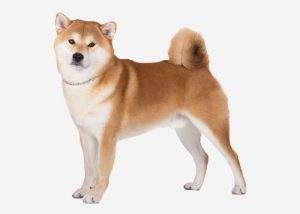
The is the smallest of the six original and distinct spitz breed of dog from Japan. A small, agile dog that copes very well with mountainous terrain, the Shiba Inu was originally bred for hunting. It is similar to but smaller than the Akita Inu. It is one of the few ancient dog breeds still in existence in the world today.
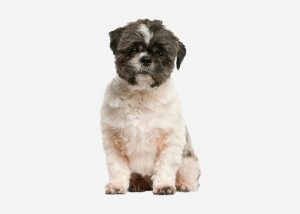
A shih tzu is a toy dog breed weighing 5–7.25 kilograms, with long silky hair. The breed originated in China. Shih Tzu were officially recognized by the American Kennel Club in 1969. The name is both singular and plural.
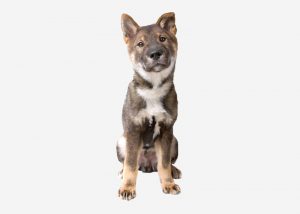
The Shikoku (四国犬 Shikoku-inu?, alternative names: Kochi-ken, Mikawa Inu, Japanese Wolfdog) is a native, primitive Japanese breed of dog from Shikoku island that is similar to a Shiba Inu. The Shikoku is not a recognized breed of the American Kennel Club, but it is recognized by the Japan Kennel Club, an organization recognized by AKC as an official foreign registry (AKC recognizes the Shiba Inu, however). The Shikoku is also in the Canadian Kennel Club Hound group and the United Kennel Club, awaiting full recognition. In 1937 the Japanese Crown recognized the Shikoku dog as a living “natural monument” of Japan.
The Shiloh Shepherd is a rare breed of dog that is still under development. They are not recognized by any major kennel club, but may be shown in rare breed organizations.Shiloh Shepherds are larger and have a straighter back than most modern s; they are bred for intelligence, size, and stable temperaments. Their coats can be a variety of colors and color mixes. They compete in obedience, agility and herding events and work as therapy dogs, search and rescue dogs, livestock guardians and service assistance.
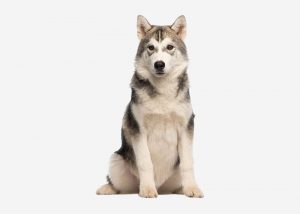
The Siberian Husky (“Sibirsky husky”) is a medium to large, dense-coat working dog breed that originated in north-eastern Siberia. The breed belongs to the Spitz genetic family. It is recognizable by its thickly furred Coat, sickle tail, erect triangular ears, and distinctive markings.Huskies are an active, energetic, and resilient breed whose ancestors came from the extremely cold and harsh environment of the Siberian Arctic. Siberian Huskies were bred by the Chukchi people of Northeastern Asia to pull heavy loads long distances through difficult conditions. The dogs were imported into Alaska during the Nome, Alaska Gold Rush and later spread into the United States and Canada. They were initially sent to Alaska and Canada as sled dogs but rapidly acquired the status of family pets and show dogs.