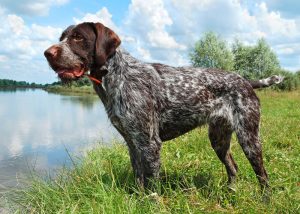
The German wirehaired pointer is a griffon type breed of dog developed in the 19th century in Germany for hunting. It became a leading gun dog in Germany in the later part of the 20th century. It is the result of the careful mixing of the griffon, Deutscher Stichelhaar, Deutscher Kurzhaar, and the hunting Pudelpointer in the late 19th century.
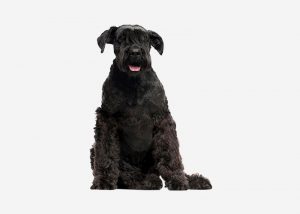
Munchener These original Giant Schnauzers were considered a rough-coated version of the German pinscher breeds, and their hair was thought to help them withstand the harsh German winters and bites from vermin. By the turn of the 20th century the Giant Schnauzer was being used as a Guard dog at factories, brewery, butchery, and Feedlot throughout Bavaria. when the breed became popular. In 1962, there were 23 new Giant Schnauzers registered with the American Kennel Club; in 1974 this number was 386; in 1984 it was over 800 and in 1987 is was around 1000 animals.In modern times, the Giant Schnauzer is used as a police dog; is trained for obedience training, dog agility, herding, search and rescue, and schutzhund; and is shown in conformation shows. The focus in many European Schnauzer clubs is not so much on conformation shows, but on the working ability of the breed. The fur on the Giant Schnauzer’s face forms a distinct “beard” and eyebrows. Due to its breeding, the Giant Schnauzer is inherently suspicious of strangers and can be very territorial.
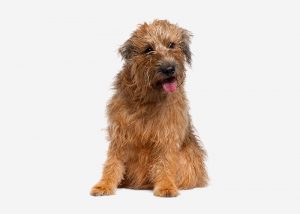
The Glen of Imaal Terrier is a breed of dog of the terrier category and one of four Irish terrier breeds. It is sometimes called the Irish Glen of Imaal Terrier or the Wicklow Terrier, and the name of the breed is often shortened by fanciers to just Glen.The breed originates in, and is named for, the Glen of Imaal in County Wicklow, Ireland. It was recognised first by the Irish Kennel Club in 1934 and most recently by the American Kennel Club in 2004.The Glen reportedly came into existence during the reign of Elizabeth I, who hired French and Hessian (soldiers) mercenaries to put down civil unrest in Ireland. After the conflict, many of these soldiers settled in the Wicklow area. They brought with them their low-slung hounds, which they bred with the local terrier stock, eventually resulting in a distinctive breed that became known as the Glen of Imaal Terrier. The Glen was developed for eradicating vermin such as rat, fox, badger, and otter, and also as a general-purpose working dog for herding. Unlike many other terriers, they are “strong dogs” rather than “sounders”—they were bred to work mute to ground, going silently into dens after their quarry, rather than barking to indicate its location. In trials, they are actually disqualified if they sound at the quarry. According to Irish lore, which is repeated in many descriptions of the breed, Glen of Imaal Terriers were also used as turnspit dogs to turn meat over fires for cooking. However, evidence for this is scarce, and engravings of turnspit dogs from the 19th century do not show much resemblance to the modern Glen. The breed almost died out before being revived in the early twentieth century. Today, the Glen of Imaal Terrier is still one of the rarest breeds of dog (in the US, registered animals number in the hundreds) and the least-known Irish terrier breed.
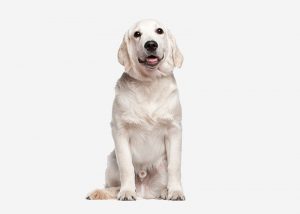
The Golden Retriever is a large-sized breed of dog. They were bred as gun dogs to retriever shot waterfowl such as ducks and upland game birds during hunting and shooting parties, and were named retriever because of their ability to retrieve shot game undamaged. Golden Retrievers have an instinctive love of water, and are easy to train to basic or advanced obedience standards. They are a long-coated breed, with a dense inner coat that provides them with adequate warmth in the outdoors, and an outer coat that lies flat against their bodies and repels water. Golden Retrievers are well suited to residency in suburban or country environments. Although they need substantial outdoor exercise, they should be housed in a fenced area because of their instinctual tendency to roam. The dog sheds copiously, particularly at the change of seasons, and requires fairly regular grooming. The breed is a prominent participant in conformation shows for purebred. The Golden Retrievers’ intelligence makes it a versatile breed and allows it to fill a variety of roles – common ones being guide dog for the blind, hearing dog for the deaf, hunting dog, detection dog, and search and rescue participant. The breed’s friendly, gentle temperament means it is unsuited to being a professional guard dog, but its temperament has also made it the third most popular family dog breed (by registration) in the United States, the fifth most popular in Australia, and the eighth most popular in the United Kingdom. Golden Retrievers are rarely choosy eaters, but require ample exercise (of two or more hours a day). The breed is fond of play but also highly trainable.
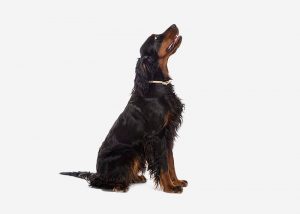
A Gordon Setter is a large breed of dog, a member of the setter family that also includes both the better-known Irish Setter and the English Setter. Setter breeds are classified as members of either the Sporting or Gundog Group depending on the national kennel club or council. The original purpose of the breed was to hunt gamebirds. Their quarry in the United Kingdom, may be partridge or grouse, pheasant, rock ptarmigan, blackgame, snipe or woodcock: whilst overseas bird dogs are worked on quail, willow grouse, sand grouse, guinea fowl, Centrocercus, francolin and any other bird that will sit to a dog – that is to say, will attempt to avoid a potential predator by concealment rather than by taking to the wing at the first sign of danger. It is this combination of a bird that will sit fast in front of a dog that will remain on point that makes bird dog work possible.
The Gran Mastín de Borinquen, also known as the Puerto Rican Mastiff, Mastín Borincano, Becerillo de Borinquen and Perro Barsino de Hacienda, is the only breed native to the island of Puerto Rico.The Borinquen Mastiff is a blend of Spanish Mastiff, traditional island dogs (Perros Jíbaros) and Latin American Molossers, all brought to the island for protection from colonial times until the early 20th century.
The Grand anglo-français blanc et noir (FCI No.323) translated into English as the Great Anglo-Francais White and Black Hound, is a dog breed of dog used in hunting as a scenthound, usually in packs. It is one of the Anglo-French hound breeds which were created by crossing French scenthounds with English (Anglo) foxhounds.
The Grand anglo-français blanc et orange (FCI No.324) translated into English as the Great Anglo-Francais White and Orange Hound, is a dog breed of dog used in hunting as a scenthound, usually in packs. It is one of the Anglo-French hound breeds which were created by crossing French scenthounds with English (Anglo) foxhounds.
The Grand Anglo-Francais Tricolore is a breed of dog used in hunting as a scenthound, usually in packs. It is one of the Anglo-French hound breeds which were created by crossing French scenthounds with English (Anglo) foxhounds.
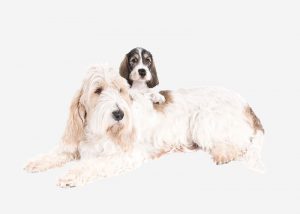
The Grand Basset Griffon Vendéen is a dog breed from France.
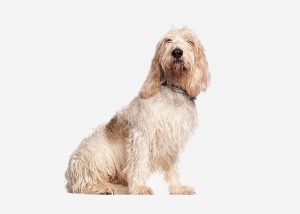
A Grand Griffon Vendéen is a breed of hunting dog originating in France. It existed as early as the 16th Century, and was the first of the Vendée griffons to be bred. It is a descendant of the Canis Segusius used by the Gauls, through the so-called King’s whites and the Griffon Fauve de Bretagne, which is also an ancestor of the Basset Fauve de Bretagne.There are also several other breeds of Griffons from Vendée, all of them smaller: the Briquet Griffon Vendéen, and the Grand Basset Griffon Vendéen and Petit Basset Griffon Vendéen. Related Griffon breeds include the Basset Fauve de Bretagne, the Griffon Bleu de Gascogne and the Griffon Nivernais.
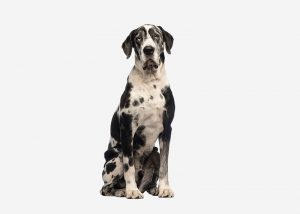
The Great Dane is a German breed of domestic dog (Canis lupus familiaris) known for its giant size. The name of the breed in Germany is Deutsche Dogge (German Mastiff). They are known for their enormous bodies and great height. The Great Dane is one of the world’s tallest dog breeds; the current world record holder, measuring 112cm from paw to shoulder, is “Zeus”. Their large size belies their friendly nature, as Great Danes are known for seeking physical affection with their owners.