Snowshoe
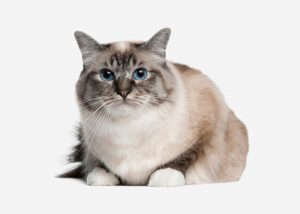
The Snowshoe is a rare breed of cat originating in the United States of America in the 1960s. Snowshoes were first produced in Philadelphia when a Siamese breeder’s cat gave birth to three kittens with white feet. The breeder, Dorothy Hinds-Daugherty, then began a breeding program to produce what were originally called “Silver Laces”, crossing the strangely marked Siamese cats with bi-color American Shorthair cats and other breeds. When Hinds-Daugherty left the program, Vikki Olander began working with the cats and recruited new breeders, as well as worked towards full recognition within cat associations. Despite having existed for 45 years, Snowshoes are rare due to the difficulty of reproducing the correct coat markings. The marks are based on recessive genes for color points and on the co-dominant but variably-expressed piebald pattern gene, making it difficult to predict the appearance of offspring.
Sokoke
The Sokoke is a more recently developed natural breed of felid hybrid domestic cats, recognized by two major Cat registry as a Cat breed. It is named after the Arabuko Sokoke, the environment of the Kenyan Khadzonzo landrace it was developed from.
Somali
The first Somali cats appeared in the litters of Abyssinians as long-haired kittens. In the 1940s a British breeder named Janet Robertson exported some Abyssinian kittens to Australia, New Zealand and North America. Descendants of these cats occasionally produced kittens with long or fuzzy coats. In 1963, Mary Mailing, a breeder from Canada, entered one into a local pet show. Ken McGill, the show’s judge, asked for one for breeding purposes.
Thai
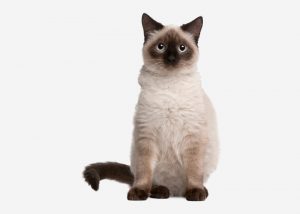
Thai is a newly classified but old cat breed, related to but distinct from the modern Western Siamese cat. This natural breed, descended from the landrace of cats of Thailand, has also been variously called Old-style, Traditional and Classic Siamese.
Tonkinese
Tonkinese are a domestic cat breed produced by crossbreeding between the Siamese and Burmese. They share many of their parents’ distinctively lively, playful personality traits and are similarly distinguished by a pointed coat pattern in a variety of colors.
Toyger
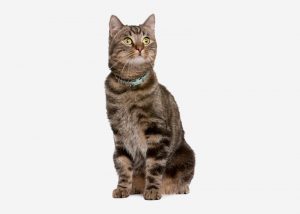
The toyger is a breed of domestic cat, the result of breeding domestic shorthaired tabbies (beginning in the 1980s) to make them resemble a “toy tiger”, as its striped coat is reminiscent of the tiger’s. The breed’s creator, Judy Sugden, has stated that the breed was developed in order to inspire people to care about the conservation of tigers in the wild. It was recognized for “Registration only” by The International Cat Association in the early 1990s, and advanced through all requirements to be accepted as a full Championship breed in 2007. There are about 20 breeders in the United States and another 15 or so in the rest of the world.
Turkish Angora
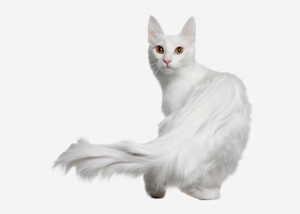
The Turkish Angora (‘Ankara cat’) is a breed of domestic cat. Turkish Angoras are one of the ancient, natural breeds of cat, having originated in central Turkey, in the Ankara region (historically known as Angora). The breed has been documented as early as the 1600s and is believed to be the origin of the mutations for both the coloration white (the dominant white gene is in truth the absence of color) and long hair. The breed is also sometimes referred to as simply the Angora or Ankara cat.
Turkish Van
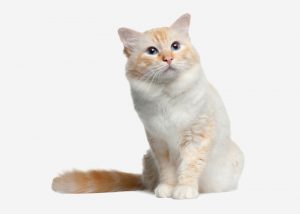
The Turkish Van (Turkish: Van Kedisi) is a longhaired breed of domestic cat with genetic origins in modern Turkey. The breed is claimed to be descended from the landrace of Van cats, mostly found near Lake Van, though one of the two original breeders has stated that none of the original cats used to found the formal breed came from the Van area. The breed is rare, and is distinguished by the Van colour pattern, where the colour is restricted to the head and the tail, and the rest of the cat is white; this is due to the expression of the piebald white spotting gene, a type of partial leucism. A Van may have blue or amber eyes, or be odd-eyed, having one eye of each colour. The Turkish Van is nicknamed the swimming cat. The breed was developed in Britain from a selection of Van cats obtained that came from various cities of Turkey. It was first recognised by a breeder/fancier organisation, the UK-based Governing Council of the Cat Fancy (GCCF), in 1969. The term “Turkish Vankedisi” is used by some organisations as a name for all-white specimens of the formal Turkish Van breed and is easily confused with the landrace Van cat, the Turkish name of which is Van kedisi.
Ukrainian Levkoy
The Ukrainian Levkoy is a cat breed of distinct appearance, having inward-folding ears and little to no hair. These cats are of medium size with a longish animal, appearing both muscular and slender. They have soft, elastic skin; an excess of which leads to a wrinkled appearance. The breed is not recognized by any major, international Cat fancy, only Ukraine and Russia clubs.The Levkoy’s peculiar features are: special angular contour of its head and “stepped” profile (dog-face appearance), folded ears and large, but not wide almond-shaped eyes. The cats express sexual dimorphism.