Bengal
The Bengal is a hybrid breed of domestic cat. Bengals result from crossing a domestic feline with an Asian leopard cat (ALC), Prionailurus bengalensis bengalensis.
Birman
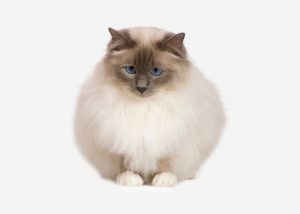
The Birman, also called the “Sacred Cat of Burma”, is a domestic cat breed. The Birman is a long-haired, point coloration cat distinguished by a silky coat, deep blue eyes and contrasting white “gloves” on each paw.The breed name is derived from Birmanie, the French form of Burma. The Birman breed was first recognized in France by the Cat Club de France in 1925, then in England by the Governing Council of the Cat Fancy (GCCF) in 1966 and in United States by the Cat Fanciers’ Association (TICA) in 1979.
Brazilian Shorthair
The Brazilian Shorthair is the first cat breed from Brazil to receive international recognition.
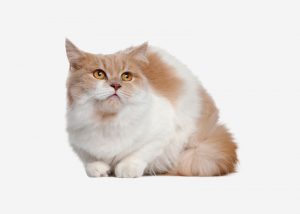
British Longhair
The British Longhair, is a medium-sized, long-haired breed of domestic cat originating in Great Britain.
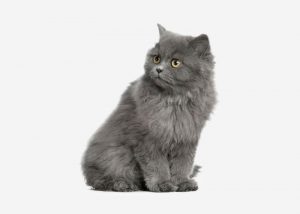
British Semi-longhair
The British Semi-longhair cat is a medium-length-hair version of the British Shorthair. Apart from its coat length, it is identical to the British Shorthair. The British Longhair is also known as the Lowlander in the United States and the Britanica in Europe, but is not recognised in the United Kingdom as a separate breed.The rationale for this breed is that the original long-haired British cat, through interbreeding with imported longhairs, was developed into the Persian (cat) and became increasingly massive and extreme in type and with longer, thicker fur than the early Persians. During the late 19th century and early 20th century, the Persian was considered the long-haired analogue of the British Shorthair. Frances Simpson’s The Book of the Cat depicts and describes the old type of Persian, today known as the Traditional Persian.During the latter part of the 20th century, a short-haired version of the modern Persian was developed and was formalized as the Exotic Shorthair; this was very different from the British Shorthair. It was therefore proposed that a long-haired cat of the British type be reintroduced into the cat fancy.These cats have very reserved personalities and usually have somewhat short legs and curly stomach hair, and are more likely to suffer from kidney complaints than various other cats.
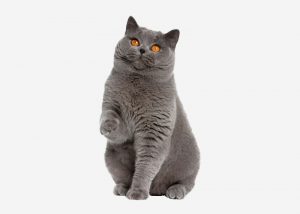
British Shorthair
The British Shorthair is a domesticated cat whose features make it a popular breed in cat shows. It has been the most popular breed of cat registered by the UK’s Governing Council of the Cat Fancy (GCCF) since 2001, when it overtook the Persian (cat) breed.
Burmese
The Burmese (Thai: ทองแดง (ศุภลักษณ์) RTGS: Thong Daeng, meaning copper colour) is a breed of domestic cat.
Burmilla
The Burmilla is a breed of domestic cat which originated in the United Kingdom in 1981. It is a cross between the Chinchilla Persian and Burmese (cat) breeds. Standards were produced in 1984, and the breed gained championship status in the United Kingdom in the 1990s.
Chartreux
The Chartreux is a rare breed of domestic cat from France and is recognised by a number of registries around the world. It is not recognised by the GCCF in the UK, ostensibly for being too similar to the British Shorthair, one of whose colours is a similar blue-grey. The Chartreux is large and muscular, with relatively short, fine-boned limbs, and very fast reflexes. They are known for their Blue#Animals (grey) water-resistant short hair double coats which are often slightly nappy in texture (often showing “breaks” like a sheepskin) and orange- or copper-colored eyes. Chartreux cats are also known for their “smile”: due to the structure of their heads and their tapered muzzles, they often appear to be smiling. Chartreux are exceptional hunters and are highly prized by farmers.As for every French cat with a Pedigree (animal), the first letter of the official name of a Chartreux cat encodes the year of its birth; all Chartreux born in the same year have official names beginning with the same letter. The code letters rotate through the alphabet each year, omitting the letters K, Q, W, X, Y, and Z. For example, a Chartreux born in 2011 would have an official name starting with the letter G.
Chausie
The Chausie is a domestication breed of cat that was developed by breeding a few individuals from a nondomestic species (Felis chaus) to a far greater number of domestic cats (Cat). The Chausie was first recognized as a domestic breed by The International Cat Association (TICA). Within the domestic breeds, the Chausie is categorized as a nondomestic Hybrid (biology) source breed. Other domestic breeds in this category include the Bengal (cat) and the Savannah (cat). Because Chausies are mostly descended from domestic cats, by about the fourth generation they are fully fertile and completely domestic in temperament. They only look wild. Chausies should be tall, long, and lean, with very long legs and medium boning. The torso is deep-chested with flat sides. The ears are broad, tall, and set high on the head, about two fingers apart. The Zygomatic bone are striking—prominent, long, and angular—and the eyes are flattened on top and form a half oval below. The coat is short, and the cats can come in three colors: solid black, black grizzled tabby, and black (brown) ticked tabby. Gold or yellow eye color is preferred, though yellower and lighter shades of green are allowed.
Colorpoint Shorthair
Colorpoint Shorthairs are the first cousins of the Siamese and the Cat Fanciers’ Association is the only registry that recognizes them as a standalone breed. In all other registries, they are part of the Siamese and Oriental breeds. These cats are distinguished by their elegance in sixteen different “point” colors beyond the four Siamese colors. The Colorpoint Shorthair shares body style, personality, coat length, and pointed color pattern with the Siamese, but in the untraditional colors of red, cream, tortoiseshell, and lynx (tabby) points. Two separate schools of thought exist about the Colorpoint Shorthair: those who think that since these cats are pointed like a Siamese, they should be considered Siamese, and those who deem the Colorpoint a Siamese hybrid. In fact these cats were initially created by hybridizing Siamese with American Shorthairs, the same hybridization that created the Oriental breed of cats.
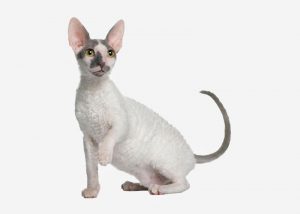
Cornish Rex
A Cornish Rex is a breed of domestic cat. The Cornish Rex has no hair except for down hair. Most breeds of cat have three different types of hair in their coats: the outer fur or “guard hairs”, which is about 5 cm long in shorthairs and 10 cm+ long in longhairs; a middle layer called the “awn hair”; and the down hair or undercoat, which is very fine and about 1 cm long. Cornish Rexes only have the undercoat. The curl in Cornish Rex fur is caused by a different mutation and gene than that of the Devon Rex. It originates from Cornwall, Great Britain.The coat of a Cornish Rex is extremely fine and sometimes curly, the softest of any cat breed. However, their light coat means that they are best suited for indoor living in warm and dry conditions, as they might get hypothermia if they stay outdoors in the winter. Their body temperature of zh:沙特爾貓 is slightly higher than that of most cats, with Cornish Rexes tending to hang around warm places such as computer monitors, light bulbs, laps and shoulders. Some Cornish Rexes also have a mild cheesy smell peculiar to the breed; this odor comes from scent glands in the paws.Often the breed is referred to as the Greyhound of the cats, because of the sleek appearance and the galloping run characteristic of the breed. These cats tend to stay playful and kittenish throughout their long lives. Some Cornish Rexes like to play fetch, race other pets or do acrobatic jumps. The Cornish Rex is an adventurous cat and is very intelligent. It can readily adapt to new situations and will explore wherever it can go, jumping into refrigerators, examining washing machines, etc. The Rex is extremely curious, seeks out the company of people and is friendly towards other companion animals. It is a suitable pet for timid children.Cornish Rex cats come in a wide variety of coat colours and patterns, outlined in the : solids, including white, black, chocolate orange and the dilutes blue, lilac and cream; all forms of Tabby cat including classic, mackerel and ticked tabbies, Bicolor cat “tuxedo” coat in many colours, Tortoiseshell cat, “smoke” colours and the colour-point pattern standard in the Siamese breed.In 2013 researchers identified the mutation that defines the Cornish Rex breed. Genome-wide analyses were performed in the Cornish Rex breed and in 11 phenotypically diverse breeds and two random bred populations. A gene on chromosome A1, the lysophosphatidic acid receptor 6 (LPAR6), was identified to have a 4 base pair deletion. This induces a premature stop codon in the receptor which is absent in all straight haired cats analyzed. LPAR6 encodes a receptor essential for maintaining the structural integrity of the hair shaft. In humans LPAR6 mutations result in a wooly hair phenotype One of the kittens, a cream-colored male named Kallibunker, had an extremely unusual, fine and curly coat; he was the first Cornish Rex. The owner then backcrossed Kallibunker to his mother to produce 2 other curly-coated kittens. The male, Poldhu, sired a female called Lamorna Cove who was later brought to America and crossed with a Siamese (cat), giving the breed their long whippy tails and big ears.The Devon Rex looks similar in appearance to the Cornish Rex, but has guard hairs and sheds. The Devon Rex mutation is different from the Cornish Rex mutation in that the Devon has shortened guard hairs, while the Cornish Rex lacks guard hairs altogether. Crosses between Devon and Cornish Rexes are not permitted in pedigrees and matings between them will not produce a cat with short wavy fur. Another hair-deficient breed is the Sphynx (cat), which has no hair but may have a very light coat of fuzz.Using the word “Rex” to imply curly or otherwise unusual fur originates from an occasion when King Albert I of Belgium (1875-1934) entered some curly-haired rabbits in a rabbit show. They did not meet the breed standard, but the show’s officials did not wish to risk offending the king by rejecting them. Instead, they accepted them but wrote “Rex” (Latin for “king”) beside their names.Cornish Rex (and other Rex breeds) are at risk for dangerous and potentially deadly side effects due to certain anesthetics. Veterinary medical care providers should err on the side of caution, and use special milder anesthetics for surgery.