Cymric
The Cymric (/ˈkɪmrɨk/ KIM-rik or /ˈkʌmrɨk/ KUM-rik) is a breed of domestic cat. Some cat registries consider the Cymric simply a semi-long-haired variety of the Manx breed, rather than a separate breed. Except for the length of fur, in all other respects the two varieties are the same, and kittens of either sort may appear in the same litter. The name comes from Cymru, the indigenous Welsh name of Wales, though the breed is not associated with Wales, and the name was possibly given as an attempt to provide a “Celtic”-sounding name for the breed. The breed’s Manx bloodline originated in the Isle of Man, though Canada claims to have developed the long-haired variant. The breed is called the Longhair Manx or a similar name by some registries.
Cyprus cat
The Cyprus cat is a landrace of domestic cat believed to be descended from cats of Egypt or Palestine brought to Cyprus by Helena of Constantinople to rid the island of snakes and vermin. It is not recognized as a formal Cat breeds by any major Cat fancy.
Devon Rex
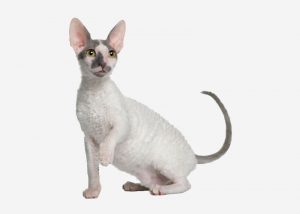
The Devon Rex is a breed of intelligent, short-haired cat that emerged in England during the 1960s. They are known for their slender bodies, wavy coat, and large ears. These cats are capable of learning difficult tricks. They are even known to recognize their owner’s name, just as they do their own.
Dragon Li
The Dragon Li, also called Chinese Li Hua, China Li Hua, Li Hua, Li Hua Mau, Li Hua Mao (in pinyin) and 狸花猫 (in Chinese character) or simply Li Mao 狸猫 is a Chinese Cat breed of domestic cat originating from nascent Chinese folklore and dynastic culture. The natural breed, based on a native landrace, is recognized as a formal breed by the US-based Cat Fanciers Association (CFA) and China’s Cat Aficionado Association (CAA).
Egyptian Mau
Egyptian Maus are a small- to medium-sized short-haired cat breed. Along with the Bahraini Dilmun Cat, they are one of the few naturally spotted breeds of domesticated cat. The spots of the Mau occur on only the tips of the hairs of their coat. The breed conformation is described by The Cornell Book of Cats as a balance between the compactness of a Burmese and the slim elegance of a Siamese. Its medium-length body is muscular, with the hind legs longer than the front, giving the Mau the appearance of standing on tiptoes when upright.
European Shorthair
The European shorthair (or Celtic shorthair) is a breed of short-haired cat originating in Italy/Sweden. It is a recently recognised breed, established to preserve the naturally occurring cats that have lived in European villages and cities for ages. Many people incorrectly refer to any stray cat as a European Shorthair.
Exotic Shorthair
The Exotic Shorthair is a breed of cat developed to be a shorthaired version of the Persian. The Exotic Shorthair is similar to the Persian in many ways, including temperament and conformation, with the exception of the short dense coat. It has even inherited many of the Persian’s health problems .The Persian was used as an outcross secretly by some American Shorthair (ASH) breeders in the late 1950s to “improve” their breed. The hybrid look gained recognition in the show ring but other breeders unhappy with the changes successfully pushed for new breed standards that would disqualify ASH that showed signs of hybridization. One ASH breeder who saw the potential of the Persian/ASH cross proposed and eventually managed to get the Cat Fanciers’ Association to recognize them as a new breed in 1966, under the name Exotic Shorthair. During the breeding program, crosses were also made with the Russian Blue and the Burmese (cat). Since 1987, the only allowable outcross breed is the Persian. The Fédération Internationale Féline recognized the Exotic Shorthair in 1986. Because of the regular use of Persians as outcrosses, some Exotics may carry a copy of the recessive longhair gene. When two such cats mate, there is a one in four chance of each offspring being longhaired. Ironically, longhaired Exotics are not considered Persians by CFA, although The International Cat Association accepts them as Persians. Other associations register them as a separate Exotic Longhair breed.
German Rex
German Rex is a medium sized breed with slender legs of a medium length. The head is round with well-developed cheeks and large, open ears. The eyes are of medium size in colours related to the coat colour. The coat is silky and short with a tendency to curl. The whiskers also curl, though less strongly than in the Cornish Rex. They may be nearly straight. All colours of coat, including white, are allowed. The body development is heavier than in the Cornish Rex – more like the European Shorthairs.
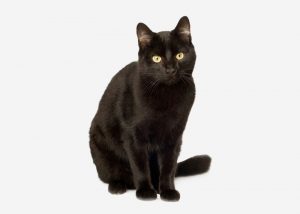
Havana Brown
The Havana Brown was the result of planned breedings between Siamese and domestic black cats, by a group of cat fanciers in the 1950s. Similar to the oriental shorthair, full color cats, also known as non-blue eyed Siamese (cat). Early breeders introduced Russian Blue into their breeding, however it is thought almost none remains in the gene pool.It has been documented that self-brown cats were shown in Europe in the 1890s, one name given to these was the Swiss Mountain Cat. These disappeared until post-world war II, with the most likely explanation that the Siamese Cat Club of Great Britain discouraging their breeding.In the early 1950s a group of English cat fanciers began working together to restore the breed. Havana Brown is the only cat that requires brown whiskers for the Kennel Club Pedigree.The ladies credited with this effort include Mrs. Armitage Hargreaves of Laurentide Cattery, Mrs. Munroe-Smith of Elmtower Cattery, the Baroness Von Ullmann of Roofspringer Cattery, Mrs. Elsie Fisher of Praha Cattery, and Mrs. Judd of Crossways Cattery. These breeders produced a chestnut (chocolate) colored kitten through mating a black shorthair and a chocolate point Siamese.While the breed developed in the UK became the Chestnut Brown Oriental and retained the Siamese conformation, it was developed in the USA to have a different head shape and became the Havana Brown. The Havana Brown is not recognized in Britain in this form.The Havana Brown is a moderately sized, muscular short-haired cat with a body of average length, but are sometimes chubby. They are a moderately active breed, compared to other short-hair cat breeds. The coat color must be brown, typically reddish-brown, with no tabby markings. Whiskers should also be brown and the eye color should be green. The head should be slightly longer than wide and the nose should have a distinct stop at the eyes. Males tend to be larger than females and are average in weight compared with other breeds.The Havana Brown is an intelligent cat that often uses its paws both to examine objects and to communicate with its owners. The most likely explanation of the breed’s name – and the one most believed by Havana Brown devotees – is that its coat color is very similar to that of Havana cigars, however, some have also argued that the breed’s name is also derived from the Havana (rabbit) which also shares the color.The breed has been recognized for championship competition in both the US and Britain since the late 1950s. It is considered an endangered breed, since the breeding pool is very small. In the late 1990s, there were only 12 Cat Fanciers’ Association-registered Havana Brown catteries and under 130 unaltered cats.
Japanese Bobtail
The Japanese Bobtail is a breed of domestic cat with an unusual “bobbed” tail more closely resembling the tail of a rabbit than that of other cats. The variety is native to Japan and Southeast Asia, though it is now found throughout the world. The breed has been known in Japan for centuries, and it frequently appears in traditional folklore and art.
Javanese
The Javanese is a breed of domestic cat recognized by the Cat Fanciers Association as a show cat. It is an oriental-type longhair.The breed was developed in North America and its name is derived from the tradition of naming oriental-type cats after south-east Asian countries.
Khao Manee
The Khao Manee cat, also known as the Diamond Eye cat, is a rare breed of cat originating in Thailand, which has an ancient ancestry tracing back hundreds of years. They are mentioned in the Tamra Maew or Cat Book Poems. Khao Manee cats are pure white with a short, smooth, close-lying coat. They can have blue eyes, gold eyes or odd eyes with one of each colour. The odd eyed Khao Manee is the preferred variety. They are muscular, athletic cats of moderate foreign type and are reputed to be active, communicative and intelligent.Although the breed is well known in its native land it has only recently been adopted by Western cat breeders, gaining “Cat registry#Recognition Levels” status from TICA in May 2009. On 3 September 2011, the breed was promoted to “Cat registry#Recognition Levels”, effective from 1 May 2012, and on 30 August 2013 the breed was promoted to “Advanced New Breed”, effective immediately.On 8 September 2010, at the meeting of the GCCF Executive Committee, the Khao Manee was granted breed name in GCCF, and was approved for exhibition only. The Khao Manee Cat Club was granted GCCF pre-affiliation at the Council meeting on 26 October 2011.