Brazilian Dogo (Dogue Brasileiro) is a Molosser-type dog breed originating in Brazil. It is neither recognized by the Fédération Cynologique Internationale (FCI) nor the American Kennel Club (AKC). However, it has the official national recognition of the Confederação Brasileira de Cinofilia (CBKC) where it belongs to the Group 11 – Breeds not recognized by the FCI (Raça não reconhecida pela FCI).
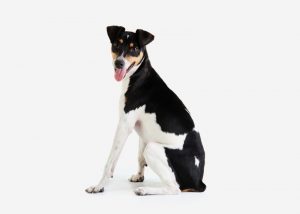
The Brazilian Terrier, commonly called Fox Paulistinha, is a dog breed developed in Brazil. It is one of several terriers probably descended from the selective breeding of the Fox Terrier with other small breeds.
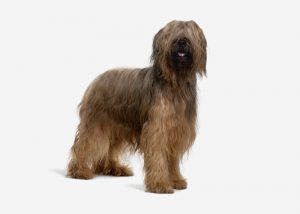
The Briard is an ancient breed of large herding dog originally from France. A Briard-type dog appears in Gaston III, Count of Foix Livre de chasse (“Book of the Hunt”), written in the 14th century. According to legend, about the same time, a Briard fought a Trial by combat with Robert Macaire to avenge its owner’s murder, Aubry of Montdidier. Charlemagne, Napoleon, Thomas Jefferson, and Gilbert du Motier, marquis de Lafayette are all said to have owned Briards. It became popular after the Paris dog show of 1863, after the breed had been fixed, with crosses with the Beauceron and the Barbet. During the First World War, the Briard was used, almost to the point of extinction, by the French Army as a sentry, messenger, and to search for wounded soldiers. The Briard’s modern-day roles include police, military and search-and-rescue work, as well as companion dog.
A Briquet Griffon Vendéen is a breed of hunting dog originating in France. Prior to the first World War I it was bred down in size by the Comte d’Elva from the Grand Griffon Vendéen, a descendant of the Canis Segusius used by the Gauls. The Briquet Griffon Vendéen was almost extinct after World War II, but thanks to the effort of Hubert Dezamy, a French dog show judge, the breed was restored.
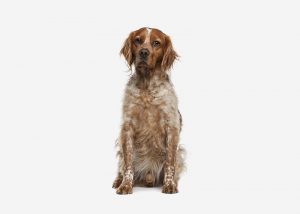
The Brittany is a breed of gun dog bred primarily for bird hunting. Although it is often referred to as a Spaniel, the breed’s working characteristics are more akin to those of a pointer or setter. Brittanys were developed in the Brittany province of France between the 17th and 19th centuries, becoming officially recognized early in the 20th.
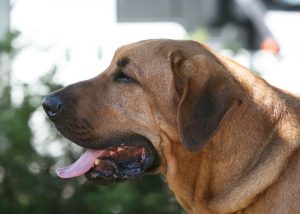
The Broholmer, also called the Danish Mastiff, is a large molosser breed of dog from Denmark, recognized by the Danish Kennel Club and the Fédération Cynologique Internationale. It has been employed as a guard dog in the homes of the wealthy. The breed’s numbers dwindled severely during WWII, but the dog made a successful return in the 1970s.
The Bruno Jura hound is a domestic dog, developed in the Middle Ages for hunting in the Jura Mountains on the Switzerland-France border.They are found in a variety of colors and have a broad head and heavy wrinkles, which differentiate them from the other Swiss hounds. It is known for hunting fox, hare, and sometimes even small deer. The Bruno Jura Hound is a skilled scent follower and is capable of following the slightest trace of a scent over the rough terrain of the Jura mountains. It needs firm handling if kept solely for companionship.Its size is similar to that of the Schweizer Laufhund, but it differs in the broadness of its head. It is related to the Bloodhound. The life expectancy of Bruno Jura hound is 12–13 years. An adult hound can weigh anywhere from 34 to 44 pounds (15.5–20 kg) and is from usually 17 to 23 inches (43–58 cm) tall.Also called the Jura Laufhund, this dog is an excellent hunter of fox, hare, and small deer. Closely related to the St. Hubert Jura Hound, its head resembles the neighboring French hounds form which it descends. Not common as a companion, the Bruno Jura Hound needs specialized training if it is to be kept for this purpose. Coming in a variety of colors, the Jura Hound was developed in the Jura Mountains in the Swiss-French border. Its rich coloring, broad head, and heavy wrinkles differentiate this dog from other mountain hounds.
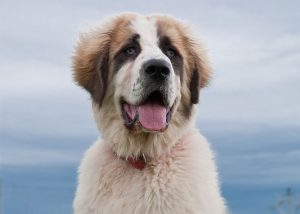
The Bucovina Shepherd (Caine Ciobanesc de Bucovina) is a strong and rustic dog which was for many centuries the best partner and companion for the Romanian shepherds in the Carpathian Mountains. The original purpose of this Mountain dog was to guard and protect the herds against predators (wild animals or thieves). Bucovina Shepherd Dogs have become appreciated by people living in cities, who keep them as watch dogs or just as pets, because of their balanced temperament and the kindliness they show to children. There are three types of Romanian shepherd dogs: Mioritic (old name Barac), Carpatin (old name Z?vod) and Bucovina Shepherd. In the Fédération Cynologique Internationale, this breed is known as the Southeastern European Shepherd.
Bull and Terrier is a breed of dog.
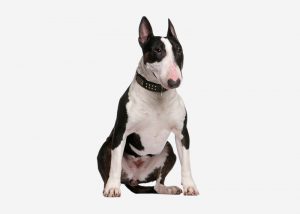
The Bull Terrier is a dog breed in the terrier family. There is also a miniature version of this breed which is officially known as the Bull Terrier (Miniature).
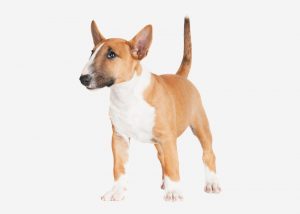
The Bull Terrier (Miniature) is a dog breed with origins in the English White Terrier, the Dalmatian and the Bulldog. The first existence is documented 1872 in The Dogs of British Island.
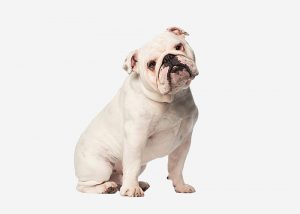
Bulldog is the name for a breed of dog commonly referred to as the English Bulldog. Other Bulldog breeds include the American Bulldog, Old English Bulldog (now extinct), Olde English Bulldogge, and the French Bulldog. The Bulldog is a muscular, heavy dog with a wrinkled face and a distinctive pushed-in nose. The American Kennel Club (AKC), The Kennel Club (UK), and the United Kennel Club (UKC) oversee breeding standards.