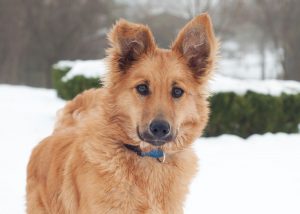
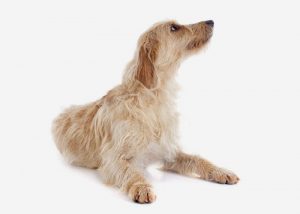
The Basque Shepherd Dog is a dog breed of dog originating in the Basque Country (historical territory) and traditionally used by the local shepherds to help them take care of their cattle and sheep.Pastor Vasco or Perro de Pastor Vasco is the Spanish name, and Euskal Artzain Txakurra, is the Basque, by which they are known in their homeland. It is believed that they originated from Central European shepherd dogs.
The Basset artésien normand (Norman Artesian Basset) is a short legged hound Dog type dog developed in France. The word Basset refers to short legged hounds.
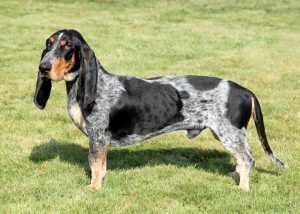
The Basset Bleu de Gascogne, also known as the Blue Gascony Basset, is a long-backed, short legged Dog breed of dog of the hound type. A breed with origins in the Middle Ages which descends from the Grand Bleu de Gascogne however it nearly went extinct around the early 19th century and its saviour was attributed to Alain Bourbon. A French native breed, it is rare outside of its homeland. It is recognized internationally by the Fédération Cynologique Internationale, in the UK by The Kennel Club, and by the United Kennel Club in the United States. The “bleu” of its name is a reference to its coat which has a ticked appearance.
The Basset Fauve de Bretagne is a short legged hunting dog breed of dog of the scent hound type originally from Brittany, a historical kingdom of France.
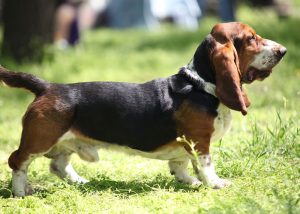
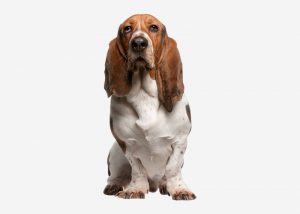
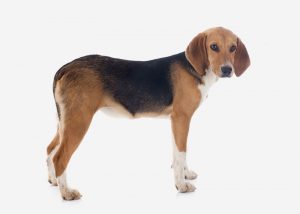
The Basset Hound is a short-legged dog breed of dog of the hound family, as well as one of six recognized Basset breeds in France; furthermore, Bassets are scent hounds that were originally bred for the purpose of hunting rabbits and hare. Their sense of smell for tracking is second only to that of the Bloodhound.The name Basset is derived from the French word bas, meaning “low”, with the attenuating suffix -et, together meaning “rather low”. Basset Hounds are usually Coat_(dog)#Patterns or Coat_(dog)#Patterns of standard hound coloration.
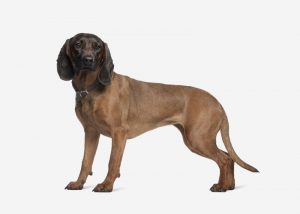
The Bavarian Mountain Hound (German = “Bayerischer Gebirgsschweißhund”) is a Dog breed from Germany. It is a scent hound and has been used in Germany since the Middle Ages to trail wounded game. It is a cross between the Bavarian Hound and the Hanover Hound.
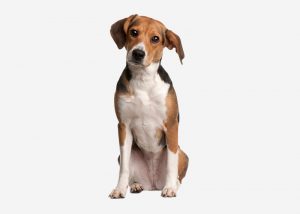
The Beagle is a dog breed of small to medium-sized dog. A member of the hound group, it is similar in appearance to the foxhound, but smaller with shorter legs and longer, softer ears. Beagles are scent hounds, developed primarily for Tracking (hunting) hare, rabbit,deer, and other small Game (food). They have a great sense of smell and tracking instinct that sees them employed as detection dogs for prohibited agricultural imports and foodstuffs in quarantine around the world. Beagles are intelligent but single-minded, and popular pets because of their size, even temper, and lack of Dog health#Genetic diseases.Although beagle-type dogs have existed for over 2,000 years, the modern breed was developed in Great Britain around the 1830s from several breeds, including the Talbot, the North Country Beagle, the, and possibly the Harrier.Beagles have been depicted in popular culture since Elizabethan era times in literature and paintings, and more recently in film, television and comic books. Snoopy of the comic strip Peanuts has been promoted as “the world’s most famous beagle”.
The Beagle Harrier is a scenthound. It is a dog breed of dog originating from France.
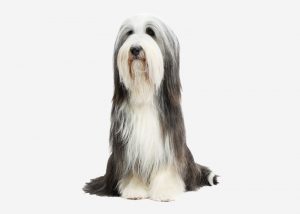
The Bearded Collie or Beardie, is a herding dog dog breed of dog once used primarily by Scotland shepherds, but now mostly a popular family companion.Bearded Collies have an average weight of 18.1kg – 27.2kg. Males are around 53.3cm – 55.9cm tall at the withers while females are around 50.8cm – 53.3cm tall.
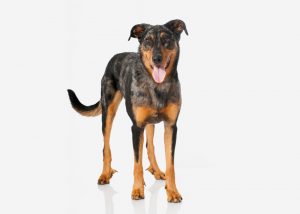
The Beauceron is a guard dog and herding dog dog breed falling into the working dog category whose origins lie in the plains of Northern France. The Beauceron is also known as Berger de Beauce (sheepdog from Beauce) or Bas Rouge (red-stockings).
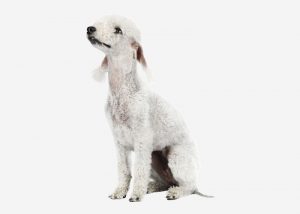
The Bedlington Terrier is a dog breed of small dog named after the mining town of Bedlington, Northumberland in North East England. Originally bred to hunt vermin in mines, the Bedlington Terrier has since been used in dog racing and dog fighting, as well as in conformation shows, numerous List of dog sports, and as a companion dog. It is closely related to the Dandie Dinmont Terrier, Whippet and Otterhound.It is described as being both good with children and “fit to kill any other dog of his weight”. Bedlingtons carry what is known as the greying gene, a dominance (genetics) trait carried on the G locus (genetics). The fur of the Bedlington creates a shape on the top of the dog’s head known as a Chonmage. Although most modern breed standards call for the dog’s topknot to be lighter than its body, when the breed was first being formed there was at least one prominent breeder, Mr. Pickett, who believed that the topknot should be darker, not lighter.The dog’s coat has been described as shaggy, hard, and rugged in style Its coat is made up of a combination of hard and soft hairs.However, both the AKC and the ASPCA call the breed “mild” and “gentle” and recommends it as being good with children. PetFinder says the breed is soft in temperament, companionable, demonstrative, loyal, and a quiet housedog. Although the breed may chase small animals outside, it is accepting of them inside. The New Zealand Kennel Club warns against keeping them with dogs that have dominate personalities, “as once challenged they are terrifying fighters, despite their gentle appearance”, Poodle may have been introduced into the breed to make the coat easier to groom and maintain. They were originally known as Rodbury Terriers, Rothbury Terriers, Many dogs in early shows were dog grooming and dyed to bring them closer to the breed standard and improve their chances of winning.Bedlington Terriers are closely related to the Dandie Dinmont Terrier. One of his descendants, Ch. Femars’ Cable Car, was featured on the cover of Sports Illustrated in the February 8, 1960 edition.
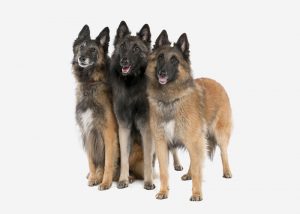
The Tervuren /tərˈvjʊrən/ (sometimes spelled Tervueren), is a member of the Belgian Shepherd family of dog breeds, named after a village in Belgium. Its classification varies, being classified under some breed standards as a breed in its own right, and in others as one of several acceptable variations of the Belgian. It is usually listed within breed standards under one or other, or a combination, of these names.