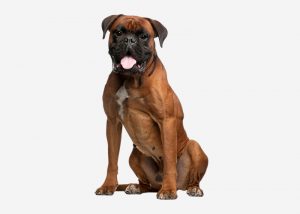
The Bullenbeisser (also known as the German Bulldog) was a breed of dog known for its physical strength and agility. The breed was closely related to the Bärenbeisser (some believe that the two breeds were the same (the names mean “Bull-baiting” and “Bear-baiting”), and the Boxer. It was in all its aspects similar to the present Spanish Bulldog and very alike to the Dogo Argentino, not only in aspect, but also in usage. There were two regional varieties, the Brabanter Bullenbeisser and the Danziger Bullenbeisser. The breed is now extinct.
The bullmastiff is a large breed of domestic dog, with a solid build and a short muzzle. The bullmastiff shares the characteristics of Molosser dogs, and was originally developed by 19th-century gamekeepers to guard estates. The breed’s bloodlines are drawn from the English Mastiff and Old English Bulldog. It was recognized as a purebred dog by the Kennel Club in 1924. They are quiet dogs, and very rarely bark.
The Bully Kutta or Pakistani Mastiff or simply Bully is a descendant of the extinct Alaunt that originated from the Sindh and Punjab regions of Pakistan, where they are the most common guard-dog. Some can be found in India, but they are rarer there. The word Bully is derived from the Punjabi or Urdu/Hindi word Bohli,which means heavily wrinkled, while the word Kutta means dog in Languages of South Asia.
A Burgos Pointer is a breed of dog native to Spain. Originating from Castile (historical region), especially in the province of Burgos, this hardy breed is used for hunting and has some outstanding features for small game.
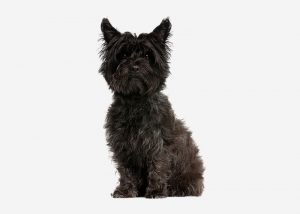
The Cairn Terrier is one of the oldest of the terrier dog breeds originating in the Scotland Scottish Highlands and recognized as one of Scotland’s earliest working dogs. The breed is commonly used for hunting and burrowing prey among the cairns.Although the breed had existed long before, the name Cairn Terrier was a compromise suggestion after the breed was originally brought to official shows in the United Kingdom in 1909 under the name Short-haired Skye terriers. This name was not acceptable to The Kennel Club due to opposition from Skye Terrier breeders, and the name Cairn Terrier was suggested as an alternative. They are usually left-pawed, which has been shown in dogs to correlate to superior performance in tasks related to scent. Cairn Terriers are ratters.
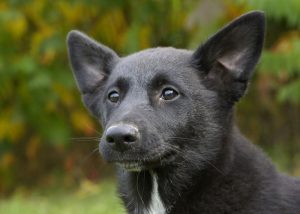
Canaan dog is a breed of pariah dog recognized as Israel’s national breed. It may have existed in the eastern Mediterranean seaboard for millennia, as referenced in ancient carvings and drawings. There are 2,000 to 3,000 Canaan dogs across the world, mostly in Europe and North America.In the Sinai Desert, a rock carving, from the first to third century AD, depicts a dog that in size and shape appears to be a Canaan type dog.In Ashkelon, a graveyard was discovered, believed to be Phoenician from the middle of the fifth century BC. It contained 700 dogs, all carefully buried in the same position, on their sides with legs flexed and tail tucked in around the hind legs. According to the archaeologists, there was a strong similarity between these dogs and the “Bedouin shepherd dogs” or the Canaan dog. A sarcophagus dated from the end of the fourth century BC, was found in Sidon lebanon, on which Alexander the Great and the King of Sidon are painted hunting a lion with a hunting dog similar in build to the dogs of Ashkelon, and similar in appearance to the Canaan dog.They survived this way until the 1930s, when Dr. Rudolphina Menzel came up with the idea to use these intelligent scavenger dogs mainly found in the desert, as guard dogs for the scattered Jewish settlements. Menzel was asked by the Haganah to help them build up a service dog organization (later to become Unit Oketz). She captured and acquired wild and semi-wild Canaan dogs. She worked with semi-free and free-living dogs of a specific type, luring them into her camp and gaining their trust. She also captured litters of puppies, finding them remarkably adaptable to domestication. The first successful adult she called Dugma (meaning example). Dr. Menzel found the dogs highly adaptable, trainable, and easy to domesticate. It took her about six months to capture Dugma, and within a few weeks she was able to take him into town and on buses.She began a breeding program in 1934, providing working dogs for the military and she gave pups to be pets and home guard dogs. She initiated a selective breeding program to produce the breed known today as the Canaan dog.In 1949 Menzel founded The Institute for Orientation and Mobility of the Blind, and in 1953, she started to train Canaan dogs as guide dogs for the blind. Although she was able to train several dogs, she found that the breed was too independent and too small for general guide dog use, although some of her dogs were used successfully by children.Her breeding program was concentrated with the Institute, where a foundation of kennel-raised Canaan dogs was established, carrying the name “B’nei Habitachon”. She later supplied breeding stock to Shaar Hagai Kennels which continued in the breeding of the Canaan dog. After her death in 1973, Shaar Hagai Kennels, managed by Dr. Dvora Ben Shaul and Myrna Shiboleth, continued the breeding program according to her instructions. In addition, a controlled collection of dogs of the original type was continued, primarily from the Bedouin of the Negev.Collection of wild Canaan dogs has become very difficult. Many of the Canaan dogs living in the open were destroyed by the Israeli government in the fight against rabies. The spread of the human population into areas that were formerly isolated, along with their pet dogs, has resulted in the loss of the natural habitat of the Canaan. Even the majority of Bedouin dogs today, other than those of tribes still living a traditional and isolated life style, are mixed with other breeds, Myrna Shiboleth visits the Negev regularly, looking for good specimens living by the Bedouin camps, that she can breed with her dogs and use to strengthen the gene pool., and in the last few years, several excellent dogs have been found and brought into the breeding group.
Other names include qimmiq or qimmit. Although once used as the preferred method of transportation by Inuit in the Northern Canada, by the 1960s traditional working dog teams became increasingly rare in the North. Contributing factors to the breed’s decline include the increasing popularity of snowmobiles for transportation and the spread of infectious canine diseases. Controversy surrounds the intentional destruction of a debated number of Inuit sled dogs between 1950 and 1970 by The Royal Canadian Mounted Police as well as recent efforts to increase the breed’s population.
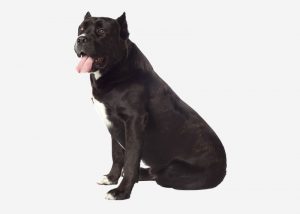
The Cane Corso is a large Italian breed of dog, for years valued highly in Italy as a companion, Guard dog and hunter.
The Cão da Serra de Aires (FCI no. 93) is a medium sized breed of dog of the Herding dog type, and is one of the indigenous regional dogs of Portugal. Called the Portuguese Sheepdog in English language, the original name refers to the Serra de Aires, a mountain near Monforte in the Aentejo region, often mistaken winth the “Serra d’Aire” a range of hills or mountains marking the boundary between Ribatejo and Oeste Subregion, north of the Tagus river. The breed is nicknamed the “cão macaco” (monkey dog, referring to the Macaque) for its furry face and lively attitude.
The Cão de Castro Laboreiro or Dog from Castro Laboreiro or Portuguese Cattle Dog or Portuguese Watch Dog, is a dog breed of the livestock guardian dog Dog type originating from Castro Laboreiro in the northern mountains of Portugal.
The Cão Fila de São Miguel (frequently translated into English as the São Miguel Cattle Dog or Cattle Dog of São Miguel Island, but other names, such as Azores Cattle Dog, may be used) is a dog breed of molosser Dog type originating on São Miguel Island in the Azores, an island chain which is one of the autonomous regions of Portugal. The breed was originally used for working with cattle.
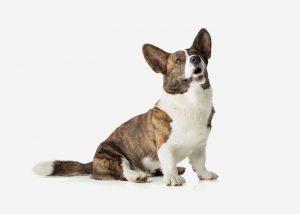
The Cardigan Welsh corgi /ˈkɔrɡi/ is one of two separate dog breeds known as Welsh corgis that originated in Wales, the other being the Pembroke Welsh corgi. It is one of the oldest herding breeds.