Korat
Korats are a slate blue-grey short-haired breed of cat with a small to medium build and a low percentage of Adipose tissue. Their bodies are semi-cobby, and surprisingly heavy for their size. They are intelligent, playful, active cats and form strong bonds with people. Among Korats’ distinguishing characteristics are their heart-shaped heads and large Eye color. They are one of a few breeds where individuals have only one color.The Korat is a natural breed, and one of the oldest stable cat breeds. Originating in Thailand, it is named after the Nakhon Ratchasima province (typically called “Korat” by the Thai people). In Thailand the breed is known as Si-Sawat, meaning “color of the sawat seed”.Korats first appeared in America in the 1950s. In 1959, Cedar Glen cattery was the first to import a pair of Korats to the US for breeding: a male named Nara and a female named Darra. The Korat was introduced to the UK by Betty Munford of the High Street, Hungerford.Although it is rare, Korats occasionally have striking or faint white markings or spots or even very faint gray stripes. Sometimes these spots increase in size with age. These are seen as flaws, and the cats are not allowed to be displayed in cat shows, although, of course, it has no effect on their personality or health.
Kurilian Bobtail
The Kurilian Bobtail is a cat breed (or breed group, depending on registry) originating from the Kuril Islands, claimed by both Russia and Japan, as well as Sakhalin Island and the Kamchatka peninsula of Russia. Short- or long-haired, it has a semi-cobby body type and a distinct short, fluffy tail. The back is slightly arched with hind legs longer than the front, similar to those of the Manx (cat). The original short-haired variant is a natural breed, ) and by the Fédération Internationale Féline (FIFe). The World Cat Federation (WCF) recognizes them as a single breed., the Cat Fanciers Association (CFA) does not recognize the breed at all.While possibly closely related to the Japanese Bobtail breed – both share the same kind of kinked, short tail, but the Japanese is leaner, more angular and less cobby – the Kurilian originated on the complete opposite side of Eurasia from the similarly named Karelian Bobtail of western Russia and Finland, and is thus unlikely to be a near relative. Genetic studies may eventually demonstrate the breed’s connection to others. Just as the Japanese Bobtail and tailless-to-short-tailed Manx (cat) arose independently on islands a world apart, the Kurilian’s bobbed tail may be an isolated spontaneous mutation, that became common on the Kuril and Sakhalin islands because of the limited genetic diversity of island biogeography (an example of the founder effect and, at, of the species-area curve).
LaPerm
The LaPerm is a recognized breed of cat. A LaPerm’s fur is curly (hence the name “Permanent wave”), with the tightest curls being on the belly, throat and base of the ears. LaPerms come in many colors and patterns. LaPerms generally have a very affectionate personality.
Maine Coon
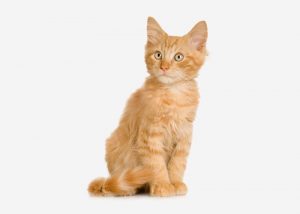
The Maine Coon, also known as American Longhair, is a breed of cat with a distinctive physical appearance and valuable hunting skills. It is one of the oldest natural breeds in North America, specifically Indigenous (ecology) to the state of Maine, where it is the official List of U.S. state mammals.Although the Maine Coon’s exact origins and date of introduction to the United States are unknown, many theories have been proposed. The breed was popular in cat shows in the late 19th century, but its existence became threatened when long-haired breeds from overseas were introduced in the early 20th century. The Maine Coon has since made a comeback and is now one of the most popular cat breeds in the world.The Maine Coon is noted for its large bone structure, rectangular body shape, and long, flowing coat. The breed can be seen in a variety of colors and is known for its intelligence and gentle personality. Health problems, such as Hypertrophic cardiomyopathy and hip dysplasia (canine), are seen in the breed, but screening methods can help minimize the frequency of these problems.
Manx
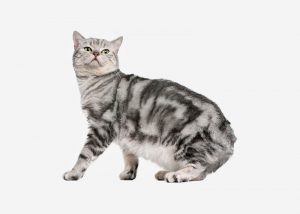
The Manx cat (/ˈmæŋks/; Manx language: kayt Manninagh), in earlier times often spelled Manks, is a breed of domestic cat (Felis catus) originating on the Isle of Man, with a naturally occurring mutation that shortens the tail. Many Manx have a small stub of a tail, but Manx cats are best known as being entirely tailless; this is the most distinguishing characteristic of the breed, along with elongated hind legs and a rounded head. Manx cats come in all coat colours and patterns, though all-white specimens are rare, and the coat range of the original stock was more limited. Long-haired variants are sometimes considered a separate breed, the Cymric. Manx are prized as skilled hunters, and thus have often been sought by farmers with rodent problems, and been a preferred ship’s cat breed. They are said to be social, tame and active. An old local term for the cats on their home island is stubbin. Manx have been exhibited in cat shows since the 1800s, with the first known breed standard published in 1903.
Minskin
The Minskin is a breed of cat derived from crossing the Munchkin with the Sphynx. In 1998 Paul McSorley began the development of the Minskin in Boston, Massachusetts. Just as the Siamese (cat) has color restricted to the points/extremities, Paul McSorley envisioned a cat with short legs and fur restricted to the points (fur-points). To accomplish his goal, he crossed is already established Munchkin cats with short legs and fur, with ‘fuzzy’ Sphynx for the hairless characteristic where fur can occur on the extremities, making for a healthier immune system. He also used his International Award Winning Burmese (cat) cats and Devon Rex in the development of his Minskin breeding program. The first cat that met his goal was “TRT I Am Minskin Hear Me Roar” ‘Rory’ was born in July, 2000. By early 2005 about 50 cats meeting the Minskin vision existed and were registered by The International Cat Association. In 2008 the Minskin became recognized as a Preliminary New Breed and is currently in TICA’s program that monitors the development of new breeds.
Munchkin
The Munchkins are the natives of the fictional Munchkin Country in the Oz books by L. Frank Baum. They first appeared in the 1900 novel The Wonderful Wizard of Oz, in which they are described as wearing only blue. They and the non-Munchkin Witch accompanying them are described as being Dorothy’s height. The 1939 film ‘ depicted Munchkins as being much shorter than other residents of Oz; they are played by either adult proportional dwarfism (i.e., Midget) or children, dressed in brightly multicolored outfits, and their land is called Munchkinland.On November 20, 2007, the Munchkins were given a star on the Hollywood Walk of Fame. Seven of the surviving Munchkins actors from the film were present. As a result of the popularity of the 1939 film The Wizard of Oz, the word “munchkin” has entered the English language as a reference to small children, dwarfs or anything of diminutive stature.
Napoleon
The Napoleon cat is a relatively new breed, categorized by The International Cat Association (TICA) as a domestic hybrid breed, “A breed developed from a deliberate cross between two existing domestic breeds, incorporating characteristics of both parental breeds into the new breed.”The two breeds (or Groups) from which the Napoleon is derived are the Munchkin and the Persian. According to TICA’s official standard for the Napoleon, these breeds represent the only permissible outcrosses one may utilize to create the Napoleon. This includes the combinations Napoleon × Napoleon, Napoleon × Munchkin, and Napoleon × a member of the Persian breeds (including Persians, Himalayans and Exotic Shorthairs. Napoleons come in both long-haired and short-haired varieties.
Nebelung
The Nebelung is a rare breed of the domestic cat. Nebelungs have long bodies, wide-set green eyes, long and dense fur, and mild dispositions. The name Nebelung — apparently a portmanteau of the German word (Nebel) for Mist or Fog and a medieval Germanic saga, Nibelungenlied — is perhaps derived from the cat’s distinctive silky blue-grey coat and from the breed’s progenitors, who were named after the two major figures in the Nibelungenlied, the German warrior Siegfried and the Icelandic queen Brunhilde.
Norwegian Forest Cat
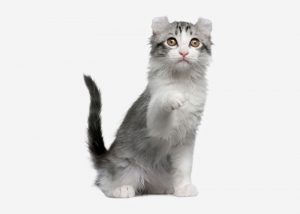
The Norwegian Forest Cat or skogkatt is a breed of domestic cat native to Northern Europe. This natural breed is adapted to a very cold climate, with top coat of glossy, long, water-shedding hairs, and a woolly undercoat for insulation. Although this is uncertain, the breed’s ancestors may have been a landrace of short-haired cats brought to Norway by the Vikings around 1000 AD, who may also have brought with them long-haired cats, like those ancestral to the modern Siberian and Turkish Angora breeds. During World War II, the breed became nearly extinct until efforts by the Norwegian Forest Cat Club helped the breed by creating an official breeding program. It was not registered as a breed with the European Fédération Internationale Féline until the 1970s, when a local cat fancier, Carl-Fredrik Nordane, took notice of the breed and made efforts to register it. Currently, the Norwegian Forest Cat is very popular in Norway, Sweden, Iceland and France. It is a big, strong cat, similar to the American Maine Coon breed, with long legs, a bushy tail and a sturdy body. The breed is very good at climbing, since they have strong claws. The lifespan is usually 14 to 16 years, though kidney and heart diseases have been reported in the breed. Specifically in this breed, complex rearrangements of glycogen branching enzyme (GBE1) can cause a perinatal hypoglycaemic collapse and a late-juvenile-onset neuromuscular degeneration in glycogen storage disease Glycogen storage disease type IV.
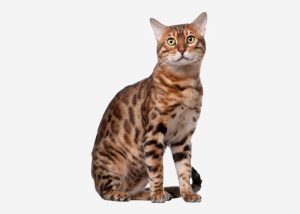
Ocicat
Print The Ocicat is an all-domestic breed of cat which resembles a wild cat but has no wild DNA in…
Ojos Azules
Ojos Azules are a relatively new cat breed of domestic cat. Ojos Azules are remarkable for their deep blue eyes. Unlike the blue eyes seen linked to the genes in bicolor cats and cats with point coloration, both of which suppress pigmentation, this gene is not linked to any certain fur color or pattern, giving the opportunity to have cats with dark coats and blue eyes. The depth of color in the eyes is greater even than that seen in a Siamese, and does not cause squinting, deafness or cross-eye.